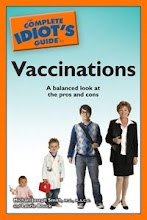
Is swine flu the next influenza pandemic? Swine flu does share genetic material with the flu strain that caused the influenza outbreak of 1918-1919, a strain that has been circulating on and off since then. Older adults are more likely to have encountered a version of this flu strain when they were younger, giving them better protection against it now. This topic is familiar to me because I was researching swine flu earlier this year as part of a book about vaccinations that I'm working on with a pediatric epidemiologist.
The 1918-1919 pandemic, the most famous influenza pandemic, infected about 30% of Americans. About 2% of the cases were fatal in an age without antiviral drugs and other medical interventions. Even then-president Woodrow Wilson caught the flu during the pandemic (and survived). Ultimately, influenza killed about 675,000 Americans between 1918 and 1919, an unlikely scenario in the U.S. today with improved medical care and a much better understanding of how infectious diseases spread.
The 1918-1919 flu pandemic was different from the seasonal flu because it spread extremely rapidly, and young adults, rather than the elderly, were most likely to die from the virus. The first U.S. cases in the pandemic were reported among soldiers on a military base in Kansas in 1918, arguably the healthiest members of society, although living in close quarters makes them more susceptible to infectious diseases.
The swine flu that began this month in Mexico is also most deadly among young adults, with numerous sad stories circulating about flu-related deaths in young adults in Mexico and the death of a child in the United States. Swine flu, an illness that pigs get, is sometimes transmitted from pigs to humans (i.e. only those who have been physically near pigs catch the virus). Rarely, swine flu has been transmitted from humans to humans. It has cropped up a few times in the past, most notably in 1976, when about 200 soldiers in Fort Dix, New Jersey were infected, four developed pneumonia, and one died. At Fort Dix, there was no evidence that the soldiers had had contact with pigs. The virus had mutated and was now transmitted from person to person.
Periodically, influenza viruses mutate into something new and more serious, with a potential to spread worldwide (causing a pandemic). For this reason, the 1976 swine flu cases spurred a strong response. A vaccine was developed and a mass swine flu vaccination campaign began that year. About 45 million people were vaccinated against the disease in 1976. The swine flu vaccine used then, however, was later recalled because it appeared to slightly increase the risk of developing a rare neurological problem called Guillain-Barre Syndrome (GBS) which can cause temporary paralysis. Swine flu did not spread and become a pandemic as feared.
For a long time, epidemiologists have been concerned about the source of the next influenza pandemic, often targeting avian influenza ("bird flu"). The swine flu virus circulating today, a mixture of pig, bird, and human viruses, is not a pandemic but it has the potential to become a problem. If you take precautions such as washing your hands adequately and often, however, you can help protect yourself and others.
The seasonal flu (influenza) itself causes plenty of problems every year. The CDC recommends a yearly flu vaccination for children up to age 18 (in part because they often pass on flu to the adults around them), adults 50 and over, and certain other groups of people such as health care providers. (This season's flu vaccination does not protect against swine flu.) Although most people recover easily from the seasonal flu, very young children and the elderly are far more likely to suffer from complications such as pneumonia if they catch it. Many people do not get their recommended flu shot each year. As a result, seasonal influenza is the top cause of vaccine-preventable deaths in United States, killing 36,000 and hospitalizing 226,000 each year, according to the CDC.
You can learn more about swine flu and how to avoid it at the CDC's Swine Influenza and You web page.
You can get updates on what's happening with the swine flu at the CDC Emergency Twitter site.
Tuesday, April 28, 2009


Wednesday, April 22, 2009
The Extra-Wide Chair
Yesterday, when I walked into my primary care doctor's waiting room with my children, my younger daughter asked me to share a seat with her. She plopped down on an extra-wide chair in the office, the sole standout in a sea of regular-width chairs there. She thought it was a small couch meant for two, when in reality is it there to accommodate obese patients. I see more and more of these chairs in doctors' offices, evidence of the high obesity rate in America.
At first glance, the extra-wide chairs would seem out of place here, because I live in a very health-conscious city. Many people here ride public transportation, a choice that guarantees some exercise as you walk to and from your bus stop. The Central Valley and local farmers' markets provide a steady stream of fresh produce, and outdoor activities ranging from mountain hikes to tidepooling are just a short drive away.
But it's not always easy to make healthy choices. The public schools promote a Walk to School Week every fall, for example, but this is a somewhat pointless program here. The public schools in San Francisco have been decoupled from their neighborhoods in response to a series of lawsuits about the uneven quality of the education they provide. As a result, many children from kindergarten on up have to commute to school by car (driven by a parent) or school bus across town every day. Even if they want to walk to school, it isn't a possibility for them. With funding cuts reducing gym to an occasional rather than a daily class at many schools as well, schoolchildren are getting less and less exercise.
When my own children were born several years ago, I began to notice what I called the "thin grandmother" syndrome. At follow-up doctor's visits after their children were born, many new mothers brought their own mothers along to help watch the baby. Most of the grandmothers were thin, but, increasingly, many of the mothers were not. No doubt they still carried some weight from their pregnancies, but I suspect lifestyle was also a factor - lots of driving, unhealthy eating habits, stress, and very little exercise. All of this happened in just one generation. The CDC's survey of obesity trends from 1985 to 2007, based on data collected from state health departments, shows a sharp increase in obesity rates during that time. In 1990, obesity rates topped out at 15% in a the states participating in the survey. By 2007, obesity rates had increased to 30% or higher in three Southern states, and over 25% in thirty states altogether. The CDC's data shows obesity rates creeping upward and westward state by state since the mid-1990s.
I understand how we got here as a society - the lure of convenience foods, the busy work schedules that allow little free time for exercise, the stress of getting everyone where they need to go each day, the time it takes to cook a healthy dinner at home or pack a healthy lunch. When I see the extra-wide chairs in the waiting rooms, though, I start to question to idea of a national health care plan, because access to health care won't solve the problem of obesity. Increasing obesity rates and the many expensive health problems linked to obesity, in fact, could bankrupt such a plan.
It's important to provide coverage for the uninsured, with states such as North Carolina recently making news headlines because a record 25% of the state's residents don't have medical insurance. But health care needs to be just one of the tools used to fight obesity. The country also needs better public policies relating to public transportation, employment rights, housing and urban planning, public education, and other issues that directly or indirectly affect people's health. Americans also need to take more personal responsibility for their health, mindful that their children are watching and learning from them. Last but not least, their choices have consequences not just for themselves and their families but for the country and its welfare as well.
Friday, January 2, 2009
Cell Phone Induced Adolescence
Last spring, when I was covering a medical conference, I used my cell phone incessantly for several days as I tracked down various doctors to interview for a set of news articles about their presentations. I kept my phone on as I walked from Moscone Center to the train to go home at the end of each long day downtown, and worried about what calls I might miss when the train went underground.
One night, when I got off the train in my neighborhood, I realized that the weather that day was, in fact, absolutely stunning. Who knew? I had been inside all day, running from session to session and downing coffee and sandwiches in the press room. That night, the sky was pink from the setting sun, the air soft and warm, and the tree leaves the pale green of spring. Just as I started to relax and enjoy the evening, my phone rang. I jumped and rummaged in my bag for the phone, but it was silent. That noise wasn't my phone's ring tone. I stopped on the sidewalk and listened. No, it wasn't my phone - it was a songbird. Perhaps the bird was trying to tell me to turn off my phone.
And so, when my husband and I decided to upgrade our old cell phones a few days ago, a growing necessity for our respective work, I had mixed feelings about it. On the one hand, I craved a hip new Blackberry to replace my boring, 4-year-old flip-open phone and (wouldn't it?) enhance my un-hip life. On the other hand, I wondered what owning a Blackberry, commonly referred to as "Crackberries" out here because they are so addictive, would do to me.
When he brought home a Blackberry-esque cell phone for each of us (Blackberries, we decided, were too expensive), within minutes I had it turned on and was playing with it. To keep the kids busy so I could tinker with my phone, I gave them our old cell phones. My four-year-old was not interested in them, but my six-year-old, the High School Musical fan, was. Soon she had curled up on a chair in the living room, poking at buttons to change the the screen image and theme colors of the phone. Before long, she was playing all the different tinny-sounding ring tones on the phone, over and over and over again. When I told her to put the phone away, she rolled her eyes at me. When we took it away, she pouted.
The next morning over breakfast, my husband and I excitedly pulled out our new phones and tried to figure out how the camera function worked. My older daughter ignored her cereal and poked more buttons on her "new" cell phone as well. When I looked up, though, my four-year-old was staring at me, hands on her hips, with an expression of wise exasperation. Um... did I forget to get you your cereal, honey?
"Okay, everyone, put the phones away," I said. I turned mine off and got back to more important business: breakfast.
Monday, November 17, 2008
Google Flu Data Rivals CDC
Last week, internet search giant Google released the Google Flu Trends tool, which tracks possible flu outbreaks by compiling data on how often people use flu-related search terms such as "flu symptoms" and "chest congestion". Google Flu Trends provides raw data, but not context. Each year, close to 100 million Americans search for health information online, but not everyone who searches for health information is injured or ill. Since I write about medicine, for example, I usually search for health information online for my writing projects, not personal knowledge. Other searches, it seems, might be done out of idle curiosity, or even result from a keystroke error in the search bar.
Is Google Flu Trends just another odd little Google project that their employees tinker with at the Googleplex in Mountain View in between running the search engine and scanning in every book ever written? Apparently not. Google mapped five years' worth of their flu data against flu data from the Centers for Disease Control and Prevention (CDC), which the agency compiles from health care providers, emergency room visit statistics, and other sources. Data from Google correlated closely with CDC data, often predicting flu outbreaks a week or two before the CDC. Google will soon publish a paper on its methodology in an upcoming issue of Nature.
Health care researchers already search for trends in anonymized electronic medical records (EMRs) that some practices use to record patient medical data and prescriptions. More digital data will become available in the future as EMRs become more common (especially since the federal government is providing financial incentives for Medicare providers to adopt e-prescribing, starting in 2009) .
For various reasons, however, many patients are not entirely honest with their doctors about their symptoms and medical concerns, a problem health care providers have struggled with for years. A patient might be embarrassed about a medical problem, forget to mention a symptom, or simply not realize that a symptom is significant. For this reason, search engine data might provide an even larger, and potentially more accurate, data pool than EMRs to indicate the actual incidence of conditions such as pre-diabetes or early heart disease, for example. Public health officials could then use the data to create more effective screening and prevention campaigns.
Friday, October 17, 2008
Voters See Health Care As a Chronic Problem
A bipartisan survey released earlier this week found that health care is the second largest concern for voters in the upcoming presidential election, after concerns about the economy. The survey of 1,500 potential voters, who were polled from October 5 through 9 of this year, was conducted by the Partnership to Fight Chronic Disease.
Almost 60% of those surveyed said that health care is a "major issue" in their upcoming choice for president, according to a recent press release by the organization. Health care is also the top personal concern for men and women, who worry most about the cost of health care. Almost 70% of respondents said that chronic diseases should be diagnosed and treated better in order to control costs.
The Partnership to Fight Chronic Disease states that over 75% of U.S. health care dollars (in both public and private programs) are spent treating chronic diseases. I'm not surprised to read this. I was once told that 10% of Medicare patients have diabetes, but their health care costs take up 25% of the Medicare budget. All told, chronic disease costs eat up about 96% of Medicare's budget and 83% of Medicaid's budget, according to the organization.
At a presentation on aging that I attended last year, the speaker pointed out that medicine has moved from "cure to care" -- in other words, most diseases these days are managed long-term rather than cured with medical or surgical interventions. People are living longer, but not necessarily better, as chronic disease rates have been increasing steadily each year. Today, many experts, such as those affiliated with the Stanford Center on Longevity, are trying to prevent or delay the onset of chronic disease in order to cut medical costs and improve people's quality of life.
Voters seem to understand how the burden of chronic disease affects our health care system. It will be interesting to see how this issue plays out in November.
Monday, September 29, 2008
Two Good Ideas for a Bad Economy
Deductibles and health insurance premiums are going up rapidly, according to the latest Kaiser Family Foundation Employer Health Benefits survey, especially among small businesses. About two-thirds of small businesses offer health insurance plans to their employees, and of those about one-third of the plans have a yearly deductible of $1,000 or more, according to the survey. Average health care premiums paid by employees have risen five percent since last year, and roughly doubled since 1999.
In response to this trend, the Blue Cross Blue Shield Association has partnered with state governments in Oklahoma and Arizona to develop a health care premium subsidy program for small businesses with 50 or fewer employees, CQ HealthBeat News reported recently. Close to 20% of the population in both states is uninsured, according to the article. Over half of the employees who signed up for the Oklahoma program (called Insure Oklahoma), had been uninsured previously. Advocates of the partnership hope that these subsidies will decrease or eliminate the number of uninsured people in these states, CQ HealthBeat News reported.
Another good idea in today's economy: vegetarianism. A NewScientist.com article in July cited a Cornell University study that showed that if all Americans ate a vegetarian diet (unlikely, I know, but possible), they could reduce the amount of fossil fuel used to produce food by one-third. Producing animal products consumes far more energy than producing plant products for human consumption. Plants such as feed corn must be grown and transported to animals in another field in order for the animals to grow large enough to eat. Then the animals or their dairy products must be processed and transported to the grocery store. Corn meant for human consumption only takes one field and, once harvested and processed, is transported directly to the grocery store.
The health benefits of eating a plant-based or plant-biased diet are well documented. Eating less meat and dairy and more fruits, vegetables, and grains can save money on both energy costs and health expenses. Eating more plant products might not be a radical idea, but it could directly impact the troubled economy.
Subscribe to:
Posts (Atom)