Showing posts with label Autism. Show all posts

Wednesday, June 23, 2010

Living La Vida Cyber

Is communicating over the Internet good for you? Or is it just a crutch?

Reaching people online is different from print or spoken communication for one main reason: you can use new media such as video, audio, and online links to make your communications richer and more realistic, even if what you create is not actually reality.

I'm not surprised that some people with autism spectrum disorders (ASDs) have been drawn to the virtual social world Second Life, for example. In Second Life, people with ASDs can communicate in ways that are not socially acceptable in the real world, incorporating unusual movements into their Second Life avatars, for example.

"The internet has been to the autistic community what sign language has been to the deaf community: a channel of communication that allows them to speak for themselves," explains the newscaster in a 2007 news clip on this phenomenon.


If modern life is sometimes awkward for those of us with passable social skills, it's surely maddening to people with ASDs who have trouble reading social cues such as facial expressions. Second Life is probably a welcome escape for many of them. Some therapists even use Second Life to help people with ASDs practice social skills necessary in the real world, explains T. DeAngelis in an article for the American Psychological Association:
With a therapist's guidance, patients enter a protected area in Second Life designed to help them practice communicating and negotiating in realistic settings. (The area - which is simply a location within the cyberworld - is secured so patients can't enter the main part of Second Life, which [cognitive neuroscientist Sandra Bond] Chapman believes could be overly confusing and disorienting for them.) As in Second Life, both patient and therapist create avatars, or virtual representations of themselves. 
Chapman was quite optimistic about the ability of moderated Second Life sessions to improve the social skills of her patients.

But the the technologies that help people with ASDs learn to navigate the real world also serve to degrade the social skills of people without ASDs. Laptops, smart phones, iPads, and other gadgets now create a wall between people who are stuck together in the same place - a doctor's waiting room, an airport - as each person retreats into their own technology bubble.

Do airports now have televisions in the waiting areas because people really need to keep up with CNN, or because we want to alleviate the awkwardness of sitting quietly among strangers, as we slowly lose our ability to make small talk - and perhaps discover new connections -  with them? We turn to technologies such as foursquare to find out if any of our friends are in the neighborhood, instead of just looking up from the smart phone screen and looking around, hoping serendipity is on our side today.

So there it is. People with ASDs learn social skills for the real world by practicing them on Second Life, and people without ASDs lose some of their real-world social skills by spending too much time in cyberspace. Ultimately, will these two groups of people converge?

Friday, February 12, 2010

Is "Normal" Overrated?

I've been following the news around the draft proposal of the Diagnostic and Statistical Manual of Mental Disorders  revision (the DSM-V), the psychiatric "Bible" used to diagnose, classify, and (often) justify medicating mental health disorders. The draft of the fifth revision is open for public comment until April 2010; the final version will be released in 2013.

The Association of Health Care Journalists' Covering Health blog has a quick overview of the topic, with links to an in-depth article on the changes by Benedict Carey in the New York Times. Two big changes in the DSM-V include:
  • Describing Asperger's syndrome as a type of autism, instead of a separate diagnosis, under the umbrella term of autism spectrum disorder. Unlike people with severe autism, who have trouble with behavior, communication, and socialization, people with Asperger's syndrome, considered a high-functioning type of autism, have a much easier time functioning in society. People with Asperger's syndrome generally want to make social connections, but they have difficulty understanding social interactions.
  • Providing a different definition for bipolar-like behavior in children. Carey points out that children with a bipolar diagnosis are treated with sometimes-dangerous antipsychotic drugs. An alternative diagnosis, "temper dysregulation disorder with dysphoria," would be treated primarily with behavioral therapy.

Carey describes the DSM as "the guidebook that largely determines where society draws the line between normal and not normal." A person whose psychiatric problem creates a danger to himself or others certainly needs treatment. But the debate about how to classify Asperger's syndrome in particular brings up the larger question of how tolerant, or intolerant, we are of behavior that is simply different from the norm.


The blog neurodiversity.com, run by the mother of a teenager with an autism spectrum disorder, argues that diverse neurological conditions should be better understood and tolerated. Some people with autism spectrum disorders, irritated by how their conditions are misunderstood by the general public, call the rest of us "neurotypicals", bound by social conformity and a lack of creativity.

In an age that prizes - and benefits from - cultural diversity, shouldn't we allow for some neuro-diversity as well? A number of well-known people might have or have had Asperger's syndrome, including Albert Einstein, Bill Gates, and Isaac Newton. Certainly you can argue that they thought differently than the average person, but we have all benefited from their achievements.

Wednesday, February 13, 2008

ABC, the AAP, and Autism

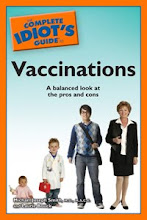
I've been thinking a lot about the American Academy of Pediatrics’ recent protests of the January 31 pilot episode of the ABC television show “Eli Stone.” In the lawyer drama, a mother receives a $5.2 million settlement after she charges that the mercury-laden preservative thimerosol that was used in a vaccine caused her child’s autism. Since many children are diagnosed with autism around the time that they receive a number of vaccinations, some people have linked these vaccinations with autism, especially the MMR (measles, mumps, and rubella) vaccination.

A small but influential 1998 study suggesting a link between thimerosol and autism was later retracted by its authors, and researchers have since found no link between vaccinations and autism. Furthermore, thimerosol was dropped as a preservative in standard vaccines in the U.S. in 2001.

Some parents still refuse vaccinations for their children, though, due to concerns about vaccine contents and the possibility of rare complications. Their choices have lead to regional, sometimes fatal outbreaks of measles and whooping cough (pertussis) among unvaccinated children. Right now, for example, there is a measles outbreak in San Diego, with ten unvaccinated children and infants infected and over fifty quarantined.

The AAP only fueled the vaccination debate, however, with an emotional press release in late January, calling the “Eli Stone” pilot “the height of reckless irresponsibility.” In the letter, AAP President Dr. Renee R. Jenkins says that “if parents watch this program and choose to deny their children immunizations, ABC will share in the responsibility for the suffering and deaths that occur as a result. The consequences of a decline in immunization rates could be devastating to the health of our nation’s children.” The AAP went on to authorize the early release of a February Pediatrics journal article showing that infants expel the type of mercury used in thimerosol over ten times faster than they expel the type of mercury often found in fish. Some researchers believe that if heavy metals such as mercury build up in the body, they might cause autism.

But what this debate really comes down to is parents’ fear of autism, a fear that is especially acute in the San Francisco Bay Area where I live. A CDC study released in 2007 that looked at autism spectrum disorders in selected regions of the country found an average rate of autism of about 1 in every 150 eight-year-old children. Earlier estimates had suggested autism was much less prevalent, as low as 1 in 500 children. The CDC pointed out that it’s unclear whether the autism rates are increasing over time, or whether it is simply being diagnosed and reported more accurately.

Still, no one knows what causes autism, and a quick glance at the numbers makes it look like an epidemic. When I had my first child, I, too, was told by well-meaning acquaintances that mercury-laden vaccinations might cause autism, one of a long list of things to panic about as a sleep-deprived new Mom. If I had my child vaccinated and she developed autism soon thereafter, would it be my fault if the light in her mind dimmed? Was I willing to take that chance?

By the time my children were born, though, thimerosol had been pulled from the vaccines, and pertussis was making an alarming comeback in San Francisco among unvaccinated infants and adults whose pertussis vaccinations had worn off. My children were vaccinated.

There is a frightening childhood illness for every generation, it seems. At one time it was polio, until Jonas Salk developed an effective vaccine for it in the 1950s. My great aunt had polio as a young woman (luckily she recovered fully). My mother, who grew up in the Bay Area, remembers driving by San Francisco’s Shriner’s Children’s Hospital on 19th Avenue with her family, where many of the young polio patients were dependent on iron lung machines, wondering if that would happen to her. Today, the old Shriner’s Hospital is a retirement community next to a row of modern townhouses, and thanks to the vaccine polio is almost completely eradicated worldwide.